
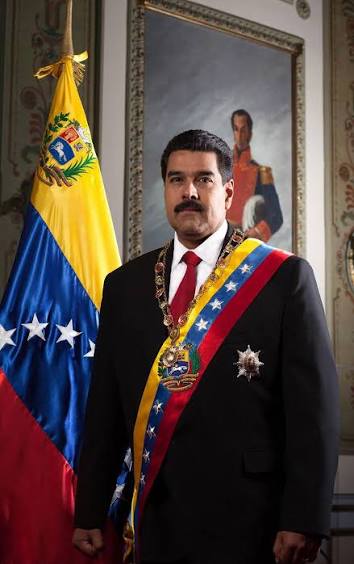
Venezuelan President Nicolás Maduro has described himself as a “prisoner of war” during his first court appearance in the United States, following his dramatic transfer to New York to face multiple criminal charges.
Maduro made the statement as he was brought into a US federal courtroom under heavy security, with observers noting the sound of leg shackles as he entered the dock. His appearance marked a major escalation in the long-running confrontation between the Venezuelan leader and Washington.
Addressing the court, Maduro rejected the legitimacy of the proceedings, insisting that his detention was politically motivated rather than judicial in nature. He portrayed his arrest as part of what he called an international campaign aimed at undermining Venezuela’s sovereignty.
“This is not justice,” Maduro was quoted as saying, adding that he considered himself a captive taken during a geopolitical conflict rather than a defendant facing criminal prosecution.
US prosecutors, however, maintain that the case is strictly legal. Maduro is accused of involvement in drug trafficking, money laundering and conspiracy, charges that American authorities say are supported by years of investigations and intelligence gathering. The US government has previously labelled him a central figure in a network accused of using cocaine trafficking as a tool to destabilise the United States.
During the brief court session, the judge outlined the charges and confirmed that Maduro would remain in custody pending further hearings. No plea was entered at the appearance, as the court focused primarily on procedural matters and security arrangements.
The courtroom drama quickly drew international attention, with supporters of the Venezuelan leader condemning the trial as unlawful, while critics described it as a long-overdue step toward accountability. Maduro’s allies argue that as a sitting head of state, he should be protected by diplomatic immunity and tried only under international legal frameworks.
The Venezuelan government has also accused the US of violating international law, insisting that Maduro’s transfer to American soil amounted to an illegal abduction. Officials in Caracas have called for his immediate release and have vowed to pursue diplomatic and legal avenues to challenge the case.
Political analysts say the trial could have far-reaching consequences for US–Latin America relations. Some warn that it may further inflame tensions in the region, while others believe it sends a strong message about Washington’s willingness to pursue foreign leaders accused of serious crimes.
Despite growing pressure, the US administration has defended its actions, stating that no individual is above the law and that the charges against Maduro are based on criminal conduct, not political differences.
As proceedings continue, the case is expected to remain in the global spotlight, raising complex questions about international justice, sovereignty and the limits of US jurisdiction. For now, Maduro remains in US custody, maintaining that he is not a criminal defendant but a political detainee caught in a wider international struggle.