

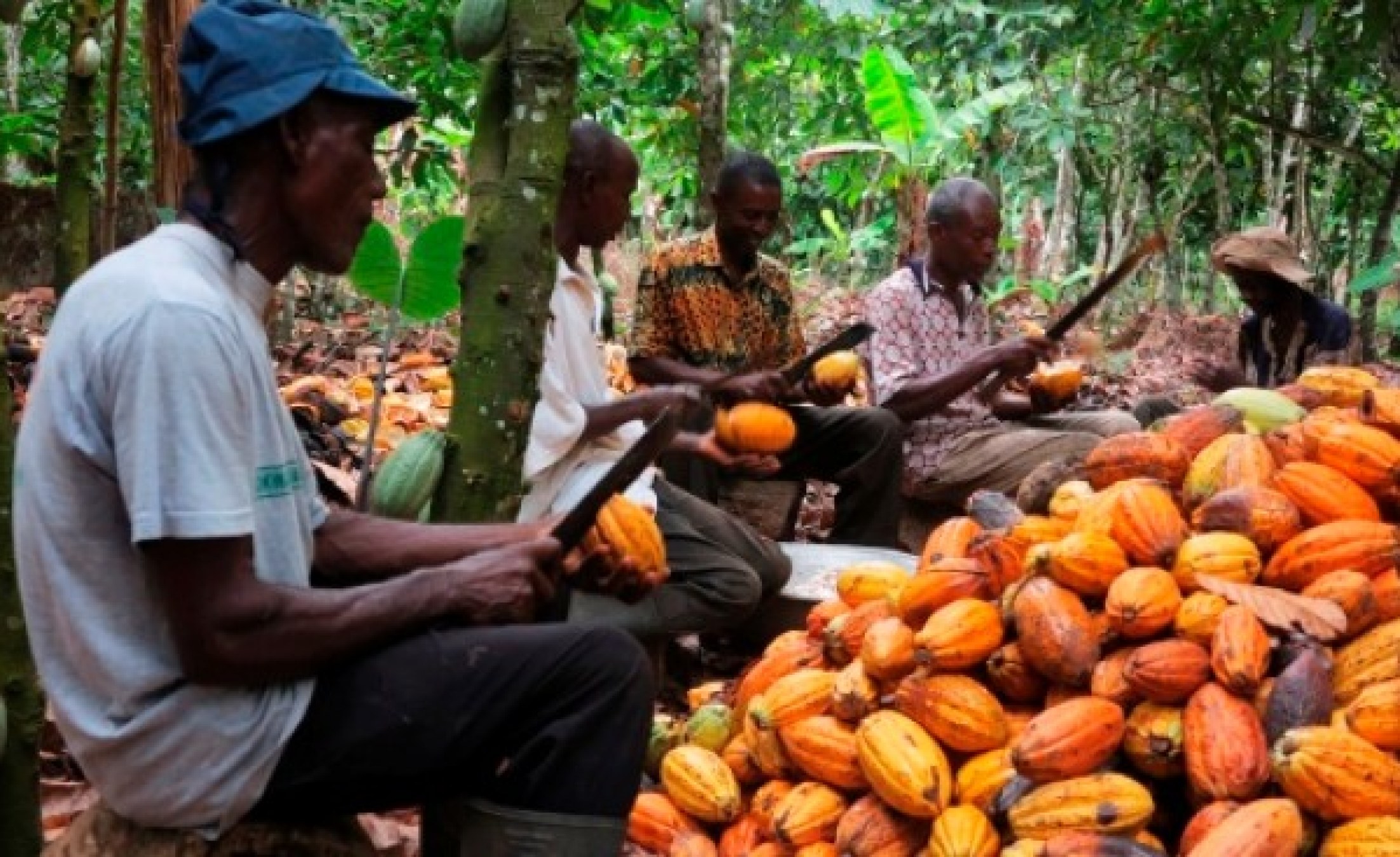
Cocoa farmers in Ghana are reporting that payment delays of up to six months are hindering their ability to harvest a promising mid-crop boosted by heavy rains, despite strong yields in the world’s second-largest cocoa producer.
In interviews with Reuters this week, farmers explained that the delayed payments have dried up their operating capital, leaving them unable to hire labor or cover harvest expenses. The cocoa sector is a vital source of livelihood for roughly 800,000 farming families across Ghana.
Theophilus Tamakloe, Vice President of the Ghana Cocoa Cooperatives Association, which represents over 340,000 members, said: “I have cocoa on the trees that needs to be harvested, but there is no money to even do that.”
Tamakloe added that he currently has 14 freshly harvested bags—weighing 896 kilograms (nearly one metric ton)—stored in his warehouse, which he has refused to hand over to buyers on credit.
“I will only release them to an LBC (Licensed Buying Company) that pays me instantly,” he stated. Currently, about 65 LBCs operate in Ghana.
Another farmer, Abdulai Adoswin, noted that he has already harvested 300 bags this season, up from 190 bags at the same time last year. However, he cautioned that further gains would depend on prompt payment before the season ends in August or September.
Regulator Says It Is Disbursing Funds
Ghana’s cocoa regulator, COCOBOD, has stated that it is disbursing funds to LBCs to settle outstanding payments dating back to November. However, two sources from different LBCs said they are still waiting for payment for beans already supplied and sold.
One of the sources, who requested anonymity due to the sensitivity of the matter, said: “My understanding is that COCOBOD has sold all the beans supplied for the 2025/26 season. We are still waiting to be paid and I really don’t know what is going on anymore.”
COCOBOD did not immediately respond to a request for comment regarding the status of the funds, though it said it would look into the matter.
Ghana has been facing a prolonged liquidity crisis in the cocoa sector for months, which has forced the government to reduce the fixed price paid to farmers for their beans.
The West African nation has also experienced declining cocoa output in recent seasons due to disease, aging trees, illegal mining, and erratic weather.
Data from the Bank of Ghana shows that cocoa exports fell by about 20% year-on-year to 956.3 million cedis ($86 million) in February.
Although the improved mid-crop yields offer some relief, they come at a time when cocoa prices have dropped by nearly 75% from record highs reached in late 2024.