
President John Dramani Mahama has ordered an urgent review of the country’s disaster preparedness and emergency response systems following recurring floods, market fires and other emergencies, a presidential adviser has said.
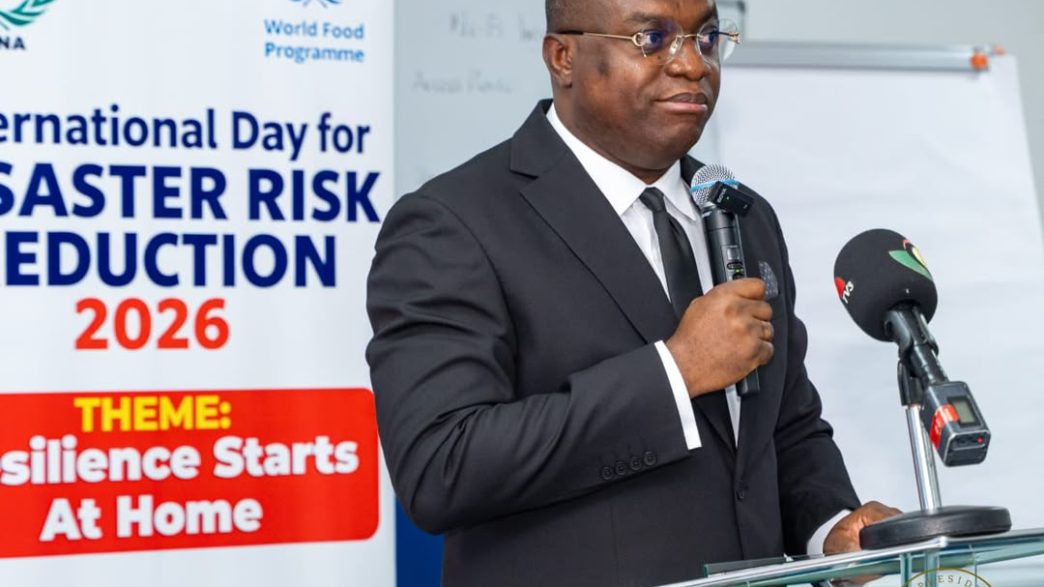
Ernest Brogya Genfi, Presidential Adviser on National Resilience and Emergency Preparedness, announced the directive at a high-level symposium marking the 2026 International Day for Disaster Risk Reduction.
The assessment, to be conducted by the Office of the Presidential Adviser on National Resilience and Emergency Preparedness (NAREP), will inform the development of a comprehensive national strategy to strengthen disaster prevention, response and recovery.
Brogya Genfi said the initiative would establish a coordinated framework to improve Ghana’s capacity to anticipate, manage and recover from disasters.
The directive follows a series of emergencies that have claimed lives, displaced residents and caused significant damage to homes, businesses and public infrastructure.
Heavy rainfall on 29 June triggered flooding in several parts of Accra, including Weija, Mallam, Achimota, Spintex, Teshie and Kwame Nkrumah Circle, disrupting transport and leaving commuters stranded.
Flooding in Hohoe, following the overflow of the Dayi River, also displaced residents, damaged property and disrupted livelihoods.
Fires have added to the losses, with outbreaks at Kumasi Central Market on 9 and 11 October and destroying merchandise and damaging 35 commercial stalls. A separate blaze at Accra’s North Industrial Area also caused extensive property damage.
Brogya Genfi said such disasters disproportionately affected traders, small business owners and vulnerable households, many of whom lost their investments and livelihoods within hours.
He cited the incidents, alongside past tragedies including the 3 June 2015 disaster at Accra’s Kwame Nkrumah Circle and the 2022 Appiatse explosion, as evidence of the need for a coordinated national approach to disaster risk reduction.
NAREP will begin consultations with key institutions and stakeholders next month to develop a strategy addressing existing vulnerabilities and strengthening national resilience, he said.
The consultations will involve government ministries and agencies, local assemblies, security and emergency services, development partners, academics, civil society groups, the private sector, traditional authorities and community leaders.
Brogya Genfi said their contributions would help improve institutional coordination, risk governance and emergency preparedness.
Speaking under the theme “Resilience Starts at Home”, he also called for stronger household preparedness, accessible early-warning systems and better urban flood-risk management.
He urged improvements to drainage infrastructure, regular desilting of waterways, effective land-use planning and stricter enforcement of building regulations to reduce flooding.
The proposed strategic plan is expected to provide a unified framework for disaster prevention, preparedness, response and recovery, while protecting lives, livelihoods, critical infrastructure and national development gains.