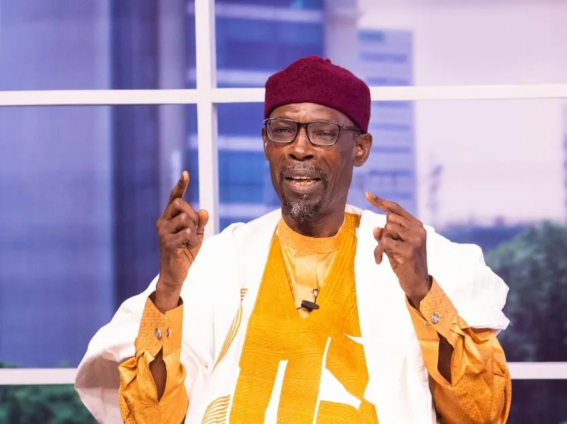
The spokesperson for the National Chief Imam, Sheikh Aremeyaw Shaibu, has urged political actors not to turn the controversial anti-LGBTQ+ bill into a partisan issue between the ruling NDC and the opposition NPP.
Speaking on Joy News’ PM Express on Tuesday, the Islamic scholar expressed disappointment over renewed political disagreements surrounding the bill. He stressed that Ghana had already reached a broad national consensus on the matter.
His comments follow fresh debate over the bill’s future after former President John Mahama’s recent remarks at Chatham House in London, where he stated that proper constitutional and legislative processes must be followed before any bill reaches the president for assent.
The debate was also reignited by Speaker of Parliament Alban Bagbin, who suggested that both sides of the House may need to review the legislation before it advances further.
Sheikh Shaibu argued that the issue had already undergone extensive national discussion and should not be reopened for political contestation. He noted that both political parties, religious bodies, and other stakeholders had clearly stated their positions, and that the bill had been debated in Parliament under both the previous and current administrations.
According to him, the bill had already passed through Parliament and only needed the former president’s assent, but procedural and legal issues prevented it from reaching his desk. He had expected the current process to be straightforward—simply to expedite the bill’s passage and get it to President Mahama, in line with earlier commitments.
Sheikh Shaibu expressed concern over growing political divisions on a matter he believes transcends party interests, calling the situation disappointing. He urged that the issue not be politicized, describing it as fundamentally non-political.
He maintained that opposition to LGBTQ+ practices is deeply rooted in Ghanaian culture and religious values, reflecting a shared national stance. He described LGBTQ+ acts as an attack on the family institution, which he called the basic unit of society, and argued that any attempt to promote such acts undermines society’s foundation.
He concluded that as a people of culture, faith, and religion, Ghanaians are united in recognizing the harm of this issue, and turning it into a political debate between the majority and minority is, to say the least, very disappointing.