

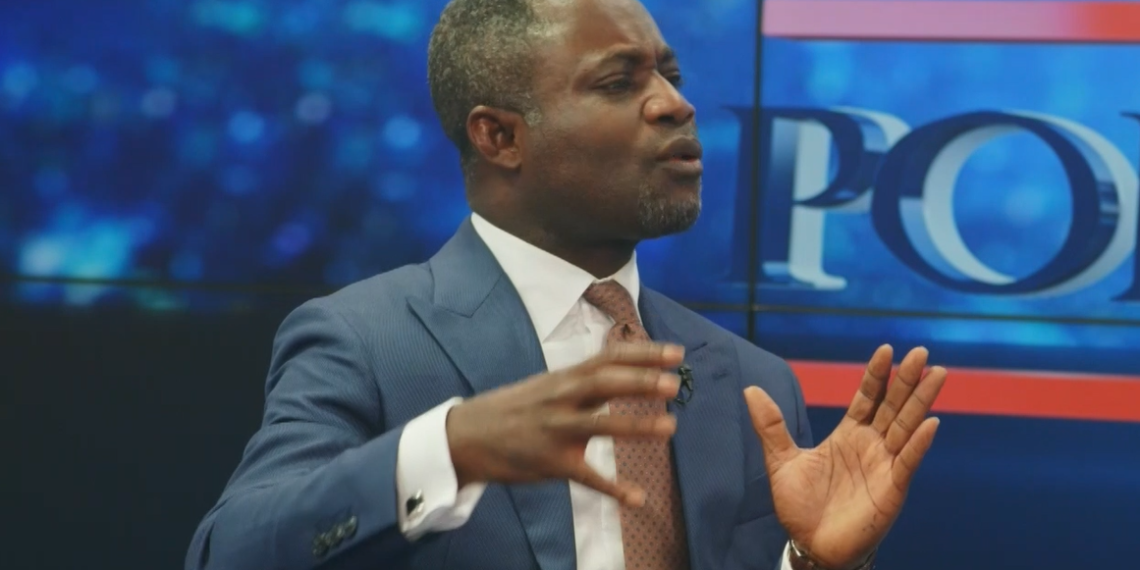
Health Minister Kwabena Mintah Akandoh says Cabinet has approved government investment in 35 district hospitals under the Agenda 111 project, with the facilities to be completed in phases.
He said the decision was intended to concentrate resources on completing selected hospitals rather than spreading funding across all the projects simultaneously.
Speaking in an interview with Bernard Avle on Channel One TV’s The Point of View on Monday, October 19, Mr Akandoh said the government would prioritise the 35 facilities while exploring partnerships to complete and operationalise others.
“Cabinet has approved to invest in 35 of the district hospitals under Agenda 111. So we are phasing them out. That was our position when we were in opposition. We thought that you can’t spread yourself too thin, and at the end of the day, you don’t do anything,” he said.
He said about GH¢4.5 billion had already been spent on the projects, arguing that the amount could have been used to complete approximately 20 hospitals if resources had been concentrated on fewer facilities.
“You have spent about GH¢4.5 billion. This GH¢4.5 billion could have finished about 20 of them. So we think that we can go gradually. So we are investing in about 35. Some of these hospitals, the contractors are on site,” he added.
Mr Akandoh said the government was also engaging faith-based healthcare providers, including the Christian Health Association of Ghana (CHAG) and the Ahmadiyya Muslim Mission, to identify some of the hospitals they could complete, equip and operate.
“Government will give them those facilities to finish, equip and then run, because after all, government pays their compensation for them. We have that kind of relationship,” he said.
The minister disclosed that another batch of between 30 and 35 Agenda 111 hospitals was being prepared for completion through partnerships.
He said the government could consider further phases of direct investment after assessing progress on the initial 35 facilities.
Mr Akandoh explained that the selection of the hospitals was guided by two main considerations: the level of completion and equitable distribution across the country’s 16 regions.
“Two main factors: level of completion and fair distribution. For example, we have about 16 regions, so at least every region must have one or two,” he said.
He explained that a hospital with a lower completion rate in one region could be selected ahead of a more advanced facility elsewhere if that was necessary to ensure fair regional distribution.
The minister also disclosed that construction work had resumed on the Sewua Government Hospital after challenges involving road access, electricity, water supply and the installation of equipment were addressed.
“We had issues about the road, we had issues about electricity, we had issues about water, we had issues about installation of some equipment. Now water solved, electricity is solved, road is solved. So the contractor is on site as I speak to you now,” he said.